
We live in a time when information is everywhere. News articles, social media posts, videos, podcasts, advertisements, and conversations with friends and family can all shape the way we understand the world.
But how do we know whether the information we’re receiving is accurate?
Political topics can be particularly difficult to evaluate because people may encounter different sources presenting completely different versions of the same event. Sometimes information is intentionally misleading. Other times, a claim may contain some accurate information while leaving out important context.
Learning how to evaluate information doesn’t mean assuming that everything we read is false. It means developing the habit of asking questions before accepting or sharing a claim.
What Is Misinformation?
Misinformation is generally understood as false or inaccurate information that is shared without necessarily intending to deceive. Disinformation, by contrast, refers to false or misleading information that is deliberately created or spread to deceive.
The distinction matters, but the challenge for readers is often the same: How can we determine whether the information in front of us is trustworthy?
Start With the Source
One of the simplest ways to evaluate a claim is to consider where it came from.
Ask yourself:
- Who originally made the claim?
- Is the source identifiable?
- Does the source provide evidence?
- Is the information based on reporting, research, firsthand knowledge, or opinion?
- Does another independent source report the same information?
A post being widely shared does not necessarily make it reliable. Likewise, a claim that confirms something we already believe deserves the same level of
scrutiny as a claim we disagree with.
Look for the Original Evidence
When possible, go beyond the headline or social media post and look for the original source.
For example, if someone makes a claim about an election, government action, court decision, or public statement, look for the underlying record. That might be an official government document, court decision, transcript, public data, or the complete statement rather than a short excerpt.
Seeing the original information can sometimes reveal important context that is missing from a social media post or headline.
Pay Attention to Context
A statement can be technically accurate while still creating a misleading impression if important context is left out.
Consider asking:
What information would I need to know to understand this claim fairly?
That might include:
- When did the event happen?
- What happened before or after it?
- What does the complete statement say?
- Are there important details missing?
- Is the source presenting fact, interpretation, or opinion?
Taking a few extra minutes to find the surrounding context can make a significant difference.
Be Careful With Information That Confirms What You Already Believe
It is natural to trust information that agrees with our existing beliefs and question information that challenges them.
That’s one reason evaluating information can be difficult.
Try reversing the process: when you see a claim that strongly confirms your point of view, ask yourself the same questions you would ask if the claim came from someone you disagreed with.
What evidence supports this?
Where did it come from?
What context might be missing?
Would I accept this source if it reached a different conclusion?
This approach can help us become more thoughtful consumers of information.
Don’t Rely on a Single Source
For controversial subjects, comparing multiple credible sources can provide a fuller picture.
This doesn’t mean searching until you find a source that agrees with you. Instead, look for independent reporting and primary sources that allow you to understand what is known, what is disputed, and where interpretation begins.
When sources disagree, consider why.
Are they using different evidence? Are they interpreting the same facts differently? Or is one source making a claim without providing sufficient evidence?
Education and Media Literacy Matter
Learning how to evaluate information is a skill.
Media literacy can help people recognize persuasive techniques, distinguish fact from opinion, identify unreliable sources, and understand how information can be presented in misleading ways.
The goal isn’t to become an expert on every subject. It’s to develop a process for asking better questions.
Before accepting or sharing a controversial claim, pause and ask:
How do I know this is true?
That simple question can be a useful starting point.
Continue the Conversation
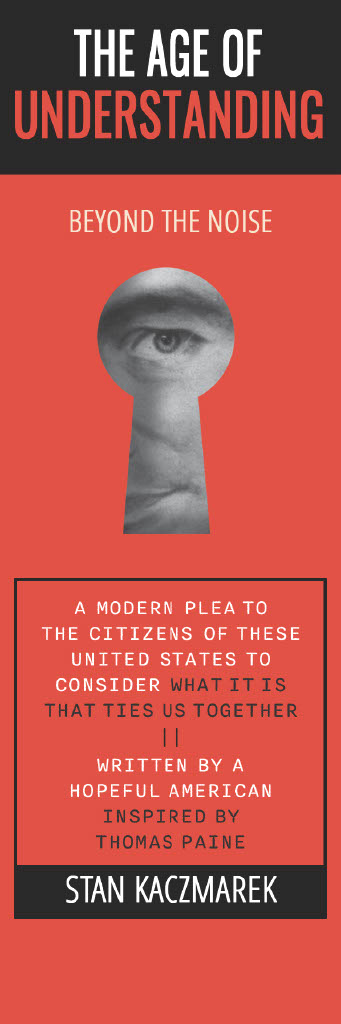
These questions are at the heart of The Age of Understanding, which encourages readers to examine how we form opinions, understand opposing perspectives, and navigate difficult conversations.
If you’re reading the book with a book club, consider discussing:
- How do you determine whether information is trustworthy?
- What makes a source credible to you?
- Have you ever believed something that you later discovered was inaccurate?
- How can we recognize information that is technically true but presented without important context?
- Is more education about misinformation and media literacy needed?
Join the discussion:
Visit our Book Club Support page to explore the Reader’s Discussion Guide and join the conversation with other readers.